![Covisum_color300.png]](https://www.covisum.com/hs-fs/hubfs/Covisum_color300.png?height=40&name=Covisum_color300.png)
A capital gain is the difference between a capital asset's basis and sales price. Capital gains are classified as either short-term or long-term based on the time the capital asset was held. Generally, the gain is considered long-term if you hold an asset for more than one year.
On a standalone basis, the first $98,900 (2026) of long-term capital gains for a married couple filing jointly (MFJ) is not taxable, provided the couple does not have other income. That is rarely the case, and it is, therefore, essential to keep in mind that the taxation of capital gains is determined by taxable income and not simply capital gains.
For a married couple filing jointly (MFJ) in 2026, the thresholds for capital gains taxation are as follows:
|
Taxable Income |
Capital Gains |
|
$0 |
0% |
|
$98,901 |
15% |
|
$613,701 |
20% |
Are these brackets displayed within Tax Clarity?
You can find the table listed above in Tax Clarity by clicking "Brackets & Thresholds" in the "Settings" section of the "Input Data" tab. In addition, you can see the bracket and threshold differences between ordinary income and capital gains, along with tables for exemptions and the possible Medicare impact.
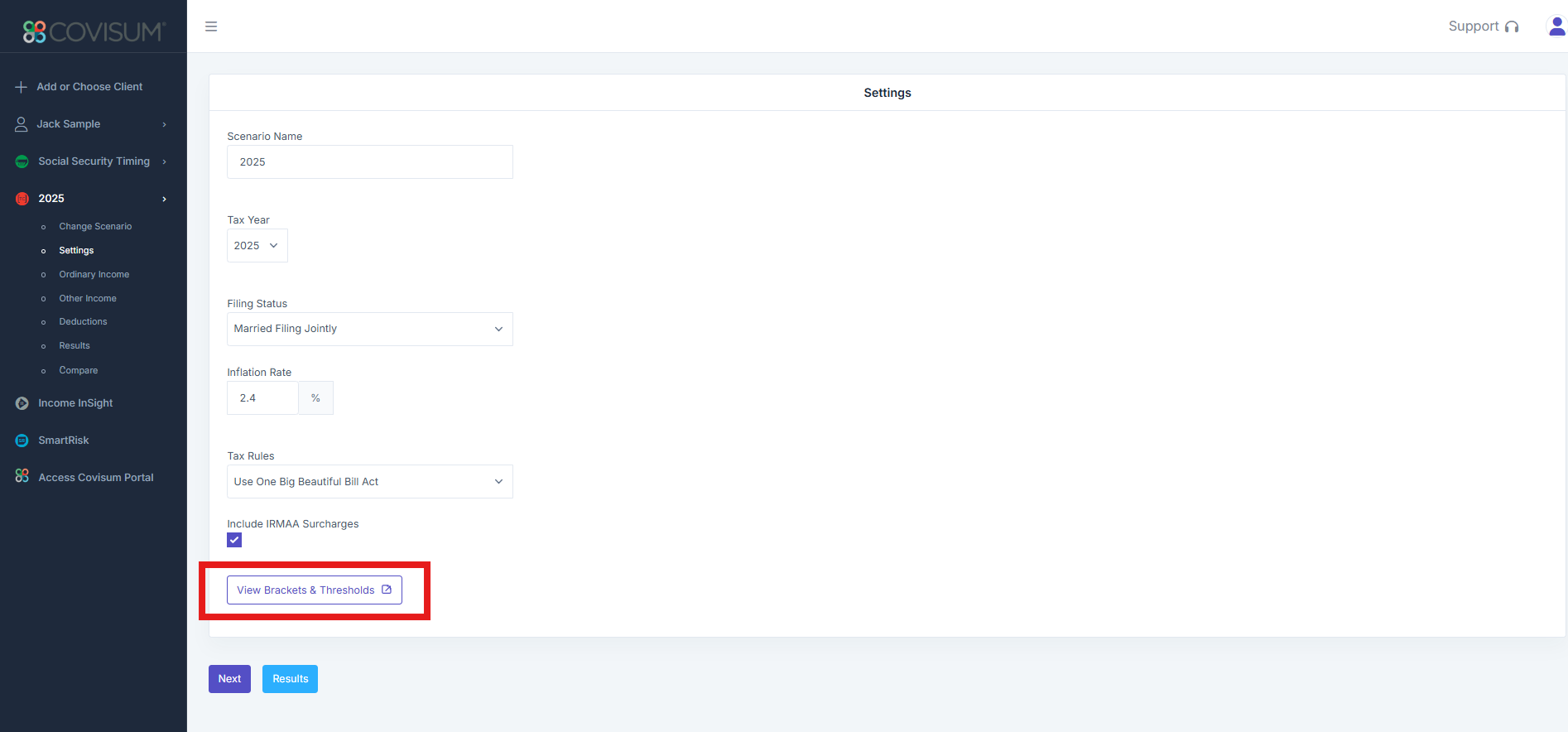
NOTE: When you click on brackets and thresholds, the application will display the thresholds in a separate browser tab.